Kerala in July sits deep in the southwest monsoon, the wettest month of the year. The coast holds around 30°C with warm, humid nights, while Munnar stays in the low 20s. Expect heavy rain in spells, rough seas, thin crowds and the lowest rates of the year on quiet backwaters.
How is Kerala's weather in July?
July is the wettest month of the year in Kerala and the middle of the southwest monsoon, which sets in around 1 June. The rain has settled into a rhythm rather than the dramatic arrival of June. The coast stays warm and humid near 30°C, the hills are cooler and mistier, and the sea is rough.
Weather in Kerala in July
By July the southwest monsoon is fully established. The rain comes in spells, often heaviest overnight and in the morning, with brighter breaks through the day rather than one continuous downpour, though long wet stretches do happen when a system sits over the coast. Daytime highs on the coast sit near 30°C, a little cooler than the pre-monsoon heat, with humid nights around 24°C to 25°C. The hills are cooler and wrapped in clouds. Munnar holds near 21°C by day and about 16°C at night, with Wayanad and Vagamon in a similar band. These are typical July averages, not a forecast for any single year. The Western Ghats slopes catch the most rain, so the hills and the far-north coast are far wetter than the south.
Overall Temperature in Kerala, area wise
The figures below are long-term July averages, not a forecast for any single year. They are grouped by region because July rain and heat land very differently on the coast, in the hills and up the north coast.
| Region and place | Avg high (°C) | Avg low (°C) | Rainfall (mm) | Rainy days | Sea (°C) |
|---|---|---|---|---|---|
| Munnar (hill) | 21 | 16 | 419 | 21 | N/A |
| Wayanad, Kalpetta (hill) | 23 | 19 | 653 | 21 | N/A |
| Vagamon (hill) | 24 | 20 | 465 | 21 | N/A |
| Thekkady, Kumily (hill) | 25 | 19 | 275 | 20 | N/A |
| Alleppey (Alappuzha) | 29.9 | 23.7 | 575 | 23 | 27.5 |
| Thiruvananthapuram (Trivandrum) | 30.0 | 25.0 | 190 | 14 | 27.5 |
| Kollam | 30.0 | 25.0 | 190 | 14 | 27.5 |
| Kozhikode (Calicut) | 29.6 | 23.8 | 750 | 24 | 27.5 |
| Athirappilly (foothill, ~100 m) | 30 | 24 | 575 | N/A | N/A |
| Silent Valley (forest, ~1000 m base) | 21 | 17 | 650 | N/A | N/A |
| Bekal (Kasaragod coast) | 29 | 23 | 1050 | 29 | 28 |
These are long-term monthly averages, not a forecast for any single year. Munnar, Wayanad, Vagamon, Thekkady, Athirappilly and Silent Valley have no dedicated IMD weather station, so their figures are modelled or lapse-rate indicative estimates and approximate, and Bekal uses the Mangalore station on the same coast. Rainfall across the hills and the north coast falls in monsoon spells, heaviest at night and in the morning. Silent Valley's protected core at higher elevation is far wetter than the base figure shown.
Kerala Hill Stations: Weather and Temperature
The high ranges are cool, green and cloud-wrapped in July, with rain most days and limited long views. Carry a light layer and expect slippery trails.
1. Wayanad. Around 23°C by day and 19°C at night, with heavy rain near 653 mm. This is landslide-prone country, so adventure tourism and trekking are often suspended during rain alerts, and the Mundakkai and Chooralmala areas hit by the 2024 landslides remain off limits. Base around Kalpetta or Vythiri and check conditions before travelling.
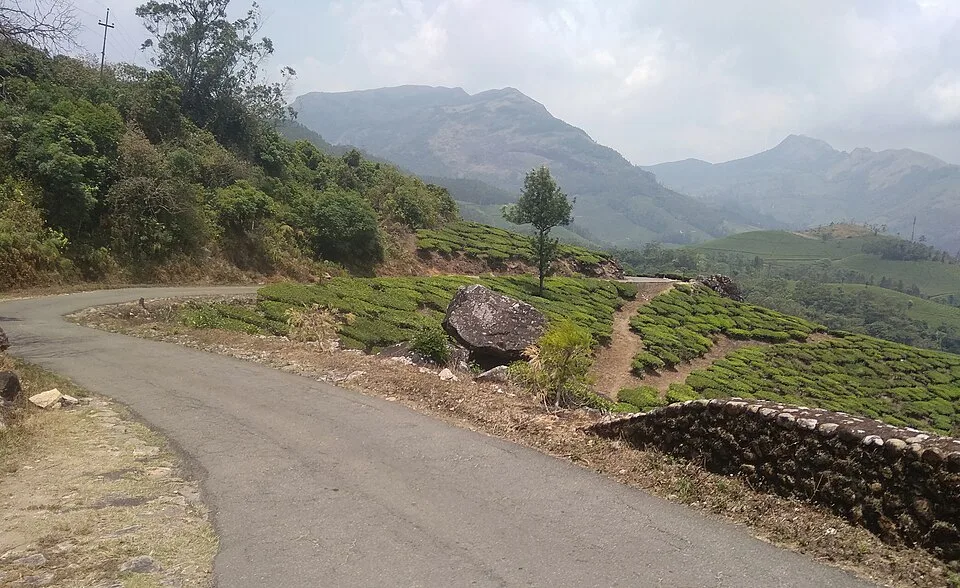
2. Munnar. The coolest of the group, near 21°C by day and 16°C at night, with about 419 mm of rain over 21 wet days. Tea estates look their greenest, but mist often closes the high viewpoints. Plan for cloud and keep the drive up for daylight.
3. Vagamon. Near 24°C by day and 20°C at night, with heavy monsoon rain around 465 mm. The meadows and pine forest stay green and quiet, but the grassland can be fog-bound and the approach roads slick after a spell.
4. Thekkady (Kumily). In the Periyar rain-shadow belt, so July rain near 275 mm is lighter than the west-facing hills, with highs about 25°C. The forest is lush and Periyar boat cruises usually run when weather allows, though wildlife is harder to spot than in the dry months.
Kerala Coastal and Backwater Regions: Weather and Temperature
The coast is warm, humid and wet, with highs near 30°C and rough seas. The backwaters are full, green and unusually quiet.
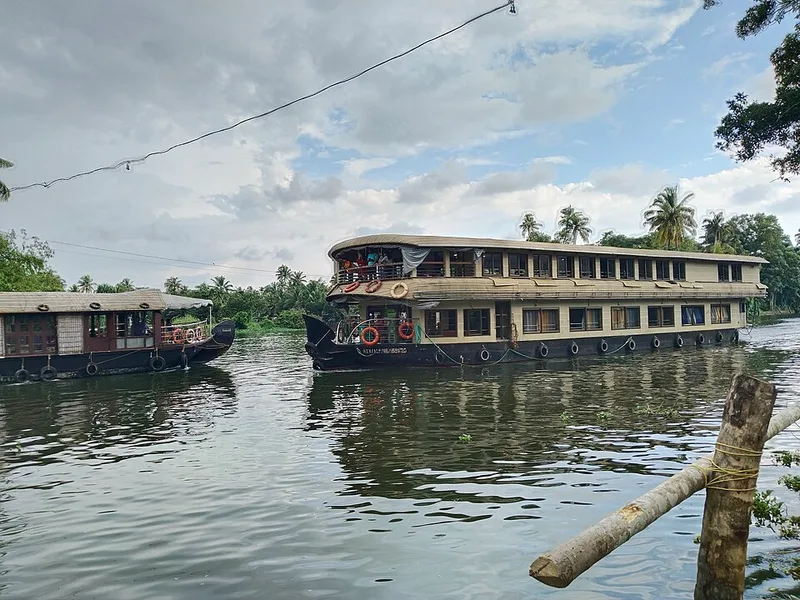
1. Alleppey (Alappuzha). About 30°C by day and 24°C at night, with heavy rain near 575 mm over 23 days and a sea near 27.5°C. The backwaters are brimming and near empty of boats, which is the real draw. Cruise between spells and expect a wet, atmospheric day on the water.
2. Thiruvananthapuram (Trivandrum). The drier end of the coast in July, near 30°C by day with about 190 mm of rain over 14 days. The capital and nearby Kovalam see less than the central and northern coast, so the far south is the easier base if you want fewer washed-out days.
3. Kollam. Similar to Thiruvananthapuram, near 30°C with about 190 mm of rain, as the two share the far-south pattern. The Ashtamudi backwaters are full and quiet, and the Kollam to Alleppey cruise runs through the monsoon when conditions allow.
4. Kozhikode (Calicut). One of the wettest coastal spots, near 29.6°C by day with heavy rain around 750 mm over 24 days. The Malabar coast takes the monsoon hard, so expect long wet stretches and rough beaches here more than in the south.
Kerala's Other Destinations: Weather and Temperature
A few lesser-known places show how differently July rain lands by elevation and coast.
1. Athirappilly. The foothill waterfall country near Thrissur, around 30°C by day, with monsoon rain that runs heavier than the Kochi figure of about 575 mm it is modelled on. July is when the falls are in full flood, loud and brown with silt, which is the reason to come now rather than in the dry season.
2. Silent Valley. The rainforest near the Palakkad border, cool at the Mukkali base near 21°C with heavy rain around 650 mm, and far wetter in the protected core. July is peak monsoon here, so eco-tourism trips and trekking are limited and depend on the Forest Department, which is worth confirming before you plan around it.
3. Bekal. The far-north Kasaragod coast is the wettest part of Kerala in July, near 29°C by day with about 1050 mm of rain over 29 days, modelled on Mangalore just up the coast. The fort and beaches are dramatic in a storm but the sea is rough and swimming is out.
Is there any rainfall in July?
Yes, the most of any month. July is the peak of the southwest monsoon, and Kerala is wetter now than at any other time of year. The rain tends to come in spells, heaviest overnight and through the morning, with brighter or drier breaks in between rather than one unbroken downpour, though multi-day wet stretches happen when a monsoon system parks over the coast.
The totals climb from south to north and up the Ghats. On the coast, Thiruvananthapuram in the far south stays comparatively light near 190 mm over about 14 rainy days, while Kozhikode on the Malabar coast runs near 750 mm over 24 days and Bekal near 1050 mm over 29 days. The backwater belt around Alleppey sits near 575 mm. In the hills, Munnar catches about 419 mm and Vagamon near 465 mm. For a day out, that means plan the morning loosely, keep indoor and covered options ready, and treat any clear window as a bonus.
How is the Sea Temperature in Kerala?
The Arabian Sea off Kerala is near 27.5°C to 28°C in July, from Thiruvananthapuram up to the Kasaragod coast. That is still warm to the touch. Whether it is safe to enter is a separate question, covered below, and in July the answer is almost always no because of the monsoon swell.
What to pack for a trip to Kerala in July?
- A proper rain shell or poncho, not just an umbrella. July rain is wind-driven and heavy, so a hooded waterproof beats an umbrella on exposed ground, though a sturdy umbrella helps in town.
- Quick-drying synthetics over cotton. Cotton stays wet all day in this humidity. Light synthetic shirts and trousers that dry overnight are far more comfortable.
- A dry bag or waterproof pouches for electronics. Phones, cameras and documents need protection. A dry sack or zip-lock pouches save a lot of trouble on boats and in downpours.
- Grippy, quick-drying footwear. Trails, steps and streets get slick. Sandals or shoes with grip that you do not mind getting wet work better than leather.
- A light layer for the hills. Munnar, Vagamon and Wayanad evenings are cool and damp near 16°C to 20°C, so a thin fleece or shawl is useful, nothing heavier.
- Insect repellent, and anti-leech measures for trails. Mosquitoes are active in the wet, and the hill and forest trails have leeches in the monsoon, so repellent and covered ankles help.
- A power bank and a small torch. Heavy spells can bring short power cuts, especially in the hills and backwaters, so a charged power bank and a torch are worth carrying.
- Modest clothing for temples. Keep shoulders and knees covered. Some temples set specific dress rules, so check before you go.
Waterproof the things that matter and accept that you will get wet. July travel in Kerala goes better when you plan around the rain rather than trying to dodge it.
What Festivals and Events to attend in July in Kerala?
July is a quiet month for big public festivals, falling before the Onam season builds in August. The main thread is Karkidakam, the monsoon Malayalam month tied to Ayurveda and the Ramayana. Dates follow the Malayalam calendar, so confirm them close to travel.
- Karkidakam and Ramayana Masam. The Malayalam month of Karkidakam begins on 17 July in 2027 and runs about a month. It is the traditional monsoon Ayurveda season, Karkidaka Chikitsa, and the month the Ramayana is recited daily in many homes and temples. This is the headline reason wellness travellers choose July.
- Champakulam Moolam Boat Race. Kerala's oldest snake-boat race, on the Pamba at Champakulam near Alleppey, held on the Moolam star in the Malayalam month of Midhunam. It usually falls in late June or July. The Champakulam Moolam 2027 date is July 16, 2027
- Monsoon Ayurveda packages. Not a festival, but July is when Kerala Tourism-classified centres run their main Karkidaka rejuvenation courses. Book a classified centre and a course of several days rather than a one-off treatment.
Karkidaka Vavu, the ancestral-offering new-moon day that draws big crowds to Varkala, Aluva and Thirunelli, falls on 2 August in 2027, so it sits just outside July. Onam and the Nehru Trophy Boat Race are August events and appear on the August page.
Is the Sea Safe for Swimming and Water Sports in July?
No, not on open beaches. July is the heart of the monsoon, the sea is rough with a strong swell and dangerous currents, and swimming is unsafe on most of the Kerala coast. Water sports are largely suspended for the season.
- Treat the open sea as off limits for swimming. The monsoon swell and rip currents make July one of the most dangerous months in the water, whatever the beach looks like from the sand.
- Watch the flags and lifeguards where they are posted. At patrolled beaches such as Kovalam, red flags mark no-swim conditions. In the monsoon, red is the normal state. If there is no guard and no flag, stay out.
- Expect water sports to be paused. Parasailing, surfing and boat rides at Kovalam and Varkala mostly stop for the monsoon and resume after the season. Confirm with operators rather than assuming.
- Keep backwater boating sensible too. Houseboats and ferries run, but operators pause in heavy weather. Wear the life jacket and skip a cruise if conditions are rough.
How Crowded is Kerala in July?
July is low season, among the quietest months of the year. The monsoon keeps most leisure visitors away, so the backwaters, hill stations and heritage towns are calm and availability is wide open.
The exception is the Ayurveda trade. Classified centres on the coast and in the hills fill their Karkidaka rejuvenation courses through July and into August, so a good centre can be busy even when everything around it is quiet. Indian school holidays are mostly over by July as term resumes, so even Munnar and Wayanad are easier than in May. If you want Kerala without crowds, this is it, as long as you accept the rain.
How much does a Kerala Trip cost in July?
July carries the lowest rates of the year, alongside June, because it is deep in the monsoon low season. Budget roughly Rs 2,500 to Rs 6,000 per person a day for a mid-range trip, on a twin-sharing, land-only basis, which covers a mid-range hotel, a car with driver, entry fees and meals but leaves out flights. Over a week, two people land somewhere near Rs 35,000 to Rs 84,000 before flights, moving with the hotel grade and whether you add an Ayurveda course. These are indicative figures as of October 2026.
The houseboat is the single line that moves a budget the most, and July is its cheapest window. On the Alleppey and Kumarakom backwaters, a one-bedroom boat runs about Rs 5,000 to Rs 9,000 a night for a deluxe, Rs 9,000 to Rs 16,000 for a premium, and from roughly Rs 16,000 upward for a luxury, quoted per boat per night with meals usually included. Monsoon rates sit at the floor of the year, which is one of the real reasons to travel now.
What moves the price in July is narrow: a multi-day Ayurveda package pushes a wellness trip up well beyond a sightseeing one, and a storm that forces a rebooked night can add cost. Otherwise this is as cheap as Kerala gets. For real numbers against a plan, our Kerala tour packages and the Alleppey backwater houseboat package both give you a current, costed starting point per person.
Best Kerala Activities in July
July rewards activities built around the rain and the water rather than against them, with a strong pull toward wellness.
- A monsoon Ayurveda course. July is the classic Karkidaka Chikitsa season. A multi-day course at a Kerala Tourism-classified centre is the signature reason to come now.
- A low-rate houseboat night. Cruise the Alleppey or Kumarakom backwaters at the cheapest rates of the year, with the water full and almost no other boats around.
- Athirappilly and Vazhachal falls in full flood. About two hours from Kochi, the falls are at their loudest and heaviest in the monsoon. Mind the slippery viewing paths and the barriers.
- A Fort Kochi heritage day. Good rain-friendly hours among the Chinese nets, the churches and the cafes and galleries of Fort Kochi and Mattancherry, with cover close by.
- Tea-estate mornings in Munnar. Between spells, the estates are at their greenest. Keep plans flexible for cloud and keep the ghat drive for daylight.
- A Periyar boat cruise at Thekkady. The Periyar rain-shadow belt is drier than the west-facing hills, so cruises usually run when weather allows, through a green, quiet forest.
What are the Best 5 Places to Visit in Kerala in July?
Chosen for what July does well: full-flood waterfalls, green and empty backwaters, cool misty hills and the monsoon Ayurveda season.
1. Athirappilly. Athirappilly is the July signature. The Chalakudy river falls are in full flood, loud and powerful, which they are not in the dry months, about two hours from Kochi (Cochin, COK). The forest gorge runs deep green. Watch the slippery paths, stay behind the barriers and go on a brighter morning for the best of it.
2. Alleppey and Kumarakom. The backwaters are the other reason to come in July. The channels are brimming, the paddy country is vivid green and the boats that crowd the water in winter are mostly gone, so a cruise is calm and cheap. Rates are at the yearly floor. Cruise between spells and take the wet, still atmosphere as the point.
3. Munnar. Munnar in July is cool near 21°C, misty and at its greenest, with the tea slopes glowing after rain. Long views come and go with the cloud, so treat clear windows as a bonus. Keep the ghat drive for daylight, carry a light layer, and pair estate mornings with indoor time when a spell sets in.
4. Kochi. Kochi suits the monsoon because much of it works under cover. Fort Kochi and Mattancherry pack their heritage, churches, the Chinese fishing nets, antique lanes, cafes and galleries into a small, walkable area with shelter close by. It is also the base for Athirappilly and the gateway to the backwaters, which makes it the natural July hub.
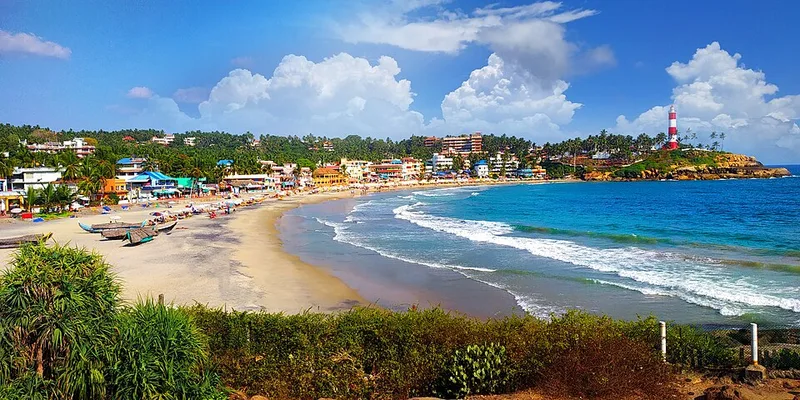
5. Kovalam. Kovalam is where the monsoon Ayurveda season lands on the coast. You cannot swim, the sea is rough and red-flagged, but the classified centres run their Karkidaka courses now, and a treatment-led stay with the rain outside is exactly what July is for. The far south is also the driest stretch of coast.
For a monsoon route that pairs the backwaters with a wellness stay, our best of Kerala circuit and our Ayurveda and backwaters package both fit July, and the Munnar tour packages focus on the high ranges on their own.
Travel Tips for a Kerala Tour in July
- Plan flexibly and keep indoor options ready. Build the day around likely morning rain, with heritage towns, museums and cafes as the wet-weather fallback.
- Keep the ghat drives for daylight. The climbs to Munnar, Wayanad and Thekkady can slow or close after heavy spells, so travel them early and check conditions first.
- Check Wayanad access before you go. Adventure tourism and trekking are often suspended during rain alerts, and the 2024 landslide zone around Mundakkai and Chooralmala stays off limits.
- Stay out of the open sea. Swimming is unsafe on the monsoon coast. Watch the flags and keep to patrolled beaches only for the view.
- Book a classified Ayurveda centre. If wellness is the trip, choose a Kerala Tourism-classified centre and a proper multi-day course rather than a one-off rub.
- Carry cash and a charged power bank. Heavy weather brings the odd power cut and card-network drop, especially in the hills and backwaters.
- Waterproof your electronics. A dry bag on boats and in downpours saves phones, cameras and documents.
FAQs
It can be, if you want the monsoon and the lowest rates. July is the wettest month, the sea is rough and beaches are out, but the backwaters are green and empty, the hills are cool and misty, and it is the classic Ayurveda season. It suits flexible, rain-ready travellers and wellness trips, not a beach-and-swim holiday.
A lot, the most of any month. The far-south coast around Thiruvananthapuram stays lighter near 190 mm over about 14 days, while Kozhikode runs near 750 mm and the Kasaragod coast near 1050 mm. The rain tends to fall in spells, heaviest overnight and in the morning, with brighter breaks rather than constant downpour.
Warm rather than hot. Coastal highs sit near 30°C, a little below the pre-monsoon heat, with humid nights around 24°C to 25°C. The hills are cooler, with Munnar near 21°C by day and about 16°C at night. High humidity makes the coast feel sticky even though the temperature has eased.
No, not safely on open beaches. July is peak monsoon, the sea is rough with a strong swell and dangerous currents, and swimming is unsafe on most of the coast. Water sports are largely paused for the season. Watch the flags at patrolled beaches like Kovalam, where red is the normal July state, and stay out if there is no guard.
Yes, among the cheapest. July is deep in the monsoon low season, so hotels and houseboats sit at the floor of the year. Budget roughly Rs 2,500 to Rs 6,000 per person a day for a mid-range trip, land only. The main thing that lifts a July budget is adding a multi-day Ayurveda course.
The ones that suit rain and water. Athirappilly's falls are in full flood, the Alleppey and Kumarakom backwaters are green and empty, Munnar is cool and misty, Kochi works under cover, and Kovalam is the base for monsoon Ayurveda. Skip open-beach plans and build the trip around the backwaters, the hills and wellness.
Yes, July is the traditional season. The Malayalam month of Karkidakam, from 17 July in 2027, is when classified centres run their Karkidaka Chikitsa rejuvenation courses, and the humid monsoon air is held to help the body absorb treatment. Choose a Kerala Tourism-classified centre and book a course of several days for the real benefit.
It can, so plan for it. Heavy spells can slow or close the ghat roads to Munnar, Wayanad and Thekkady, pause water sports, and prompt rain alerts that suspend adventure tourism, especially in Wayanad. Backwater cruises and flights usually run but can be delayed. Keep the schedule loose, travel the hill roads in daylight, and check conditions each morning.
July is Kerala at its wettest, cheapest and quietest, and it rewards a plan built around the rain, the full backwaters and a proper Ayurveda stay. Tell us your dates and whether wellness or sightseeing comes first, and we will shape a monsoon trip around the hills, the backwaters and the coast. Start with our Kerala tour packages.