January is one of the best months to visit Kerala. The coast stays warm and dry, around 31°C by day and 23°C at night, while Munnar's nights fall into single digits. Rain is rare. It is peak season, so expect crowded backwaters, top rates and heavy Sabarimala pilgrim traffic through Pathanamthitta.
How is Kerala's weather in January?
January is dry and settled across most of Kerala. The retreating northeast monsoon has cleared the south by now, so the coast sees very little rain, the backwaters are calm, and the hills turn cold at night.
Weather in Kerala in January
Kerala gets its last rains in October and November, from the northeast monsoon. By January, those rains are over. January is not the wet season coming to an end, it is the dry season in full swing. On the coast, days sit in the low 30s and nights hold around 23°C. Go inland and up, and the holiday changes completely. Munnar and the high ranges cool sharply after sunset, with frost settling on the tea on the clearest nights. One state, two very different trips, depending on whether you point at the sea or the hills.
Overall Temperature in Kerala, area wise
The figures below are long-term January averages, not a forecast for any single year. Temperatures are grouped by region because a January day in Munnar and a January day in Kovalam are not the same holiday.
| Region and place | Avg high (°C) | Avg low (°C) | Rainfall (mm) | Rainy days | Sea (°C) |
|---|---|---|---|---|---|
| Munnar (hill) | 23 | 13 | 31 | 4 | not applicable |
| Wayanad, Kalpetta (hill) | 28 | 15 | 8 | 2 | not applicable |
| Vagamon (hill) | 28 | 18 | 31 | 4 | not applicable |
| Thekkady, Kumily (hill) | 27 | 17 | 30 | 4 | not applicable |
| Alleppey (Alappuzha) | 31.9 | 23.1 | 25 | 1 | 28 |
| Thiruvananthapuram (Trivandrum) | 30.9 | 23.7 | 20 | 2 | 28 |
| Kollam | 30.9 | 23.7 | 20 | 2 | 28 |
| Kozhikode (Calicut) | 33.0 | 23.1 | 2 | 0 | 28.5 |
| Bekal (far north coast) | 33.3 | 21.1 | 1 | 0 | 28.0 |
| Marari (central coast) | 31.9 | 23.1 | 25 | 1 | 28 |
| Ponmudi (hill, near TRV) | 24 | 16 | low | N/A | N/A |
These are long-term monthly averages, not a forecast for any single year. Munnar, Wayanad, Vagamon, Thekkady and Ponmudi have no dedicated IMD weather station, so their figures are modelled estimates and approximate.
Kerala Hill Stations: Weather and Temperature
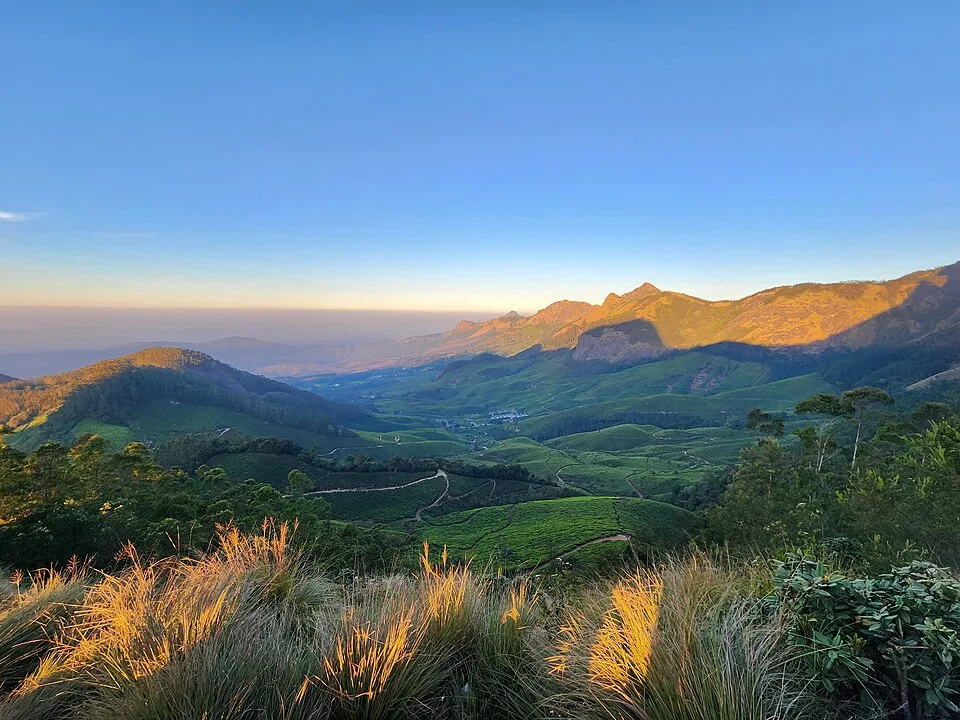
- Munnar. The coldest of the group. Days stay bright near 23°C, but nights average around 13°C and drop into single digits with frost on the clearest nights, so the early tea-estate drive needs a warm jacket.
- Wayanad. Milder than Munnar, with daytime highs near 28°C and nights around 15°C. Slightly cool after dark but not frost-cold, and good walking weather by day.
- Vagamon. You get breezy days near 28°C and cool evenings. The monthly night average is around 18°C, but Vagamon is known for colder clear nights, so carry a layer. Good for quiet meadow and pine-forest walks.
- Thekkady (Kumily). Mild days near 27°C and cool evenings around 17°C, pleasant for the Periyar area without Munnar's deep night cold.
Kerala Coastal and Backwater Regions: Weather and Temperature
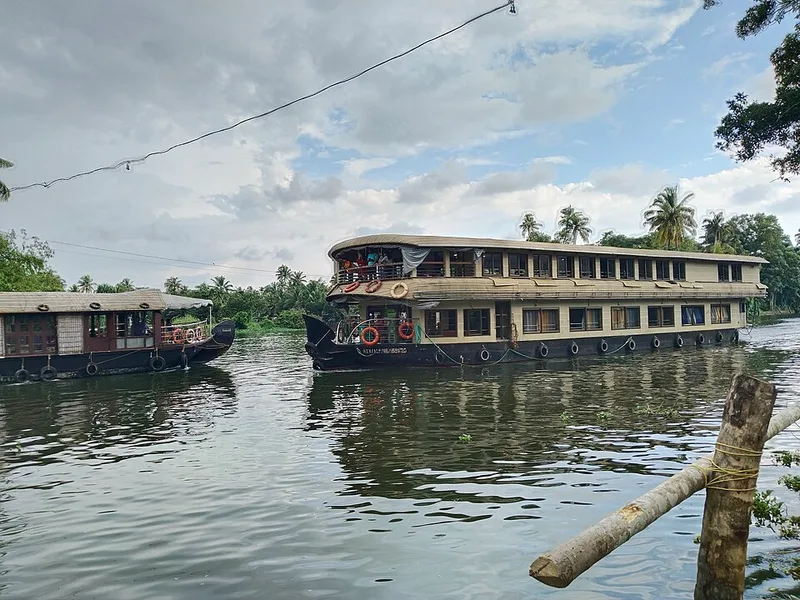
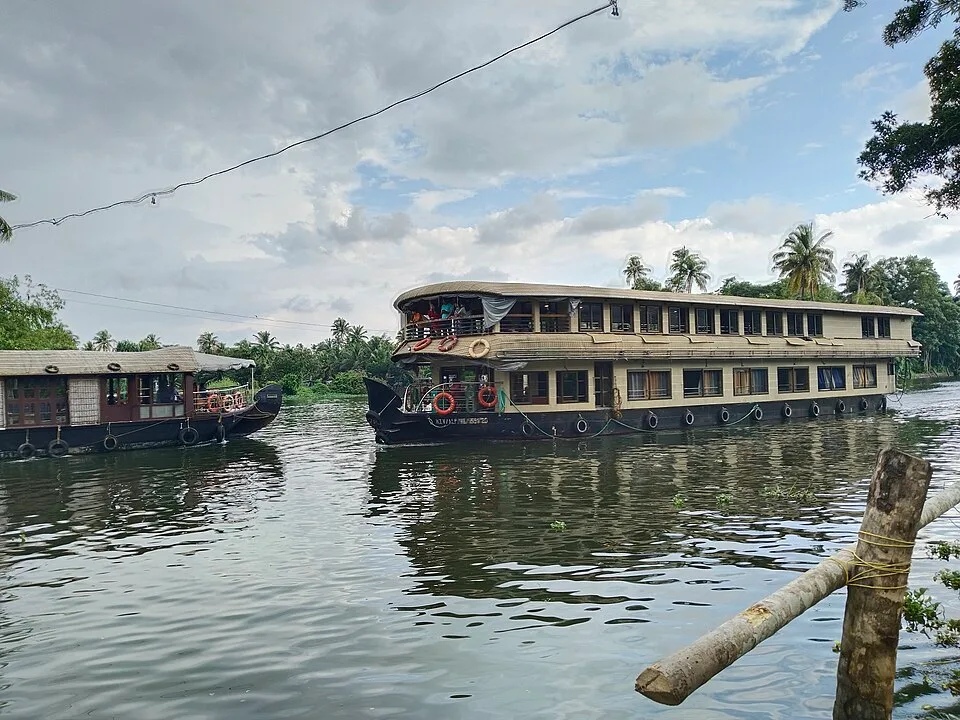
- Alleppey (Alappuzha). Warm and dry near 32°C by day and 23°C at night, with the calm water that defines the January houseboat season.
- Thiruvananthapuram (Trivandrum). Close to 31°C by day and low 23°C at night, with almost no rain and easy access to the southern beaches.
- Kollam. Much like Thiruvananthapuram, warm and dry, and the quieter southern gateway into the backwaters.
- Kozhikode (Calicut). A touch warmer and drier again, near 33°C by day, with the northern coast at its sunniest.
Kerala's Other Destinations: Weather and Temperature
- Bekal. Far-north coast, warm and dry near 33°C by day, pairing a clifftop fort with a long, uncrowded beach.
- Marari. Quiet central-coast beach just north of Alleppey, the same warm dry weather as the backwaters with far fewer people.
- Ponmudi. The nearest hill station to Thiruvananthapuram, with cool evenings and forest air about two hours from the coast.
Is there any rainfall in January?
Very little. The coast averages roughly 20 to 25 mm across 1 or 2 rainy days, and the far north near Kozhikode is drier still. Rain almost never disrupts a January plan. The hills stay mostly dry too, giving you misty mornings rather than real downpours. If you want a Kerala trip where the weather simply stays out of your way, this is the month.
How is the sea temperature in Kerala?
The Arabian Sea off Kerala sits around 28°C in January, holding between 28 and 28.5°C approximately from Thiruvananthapuram up to Kozhikode. That is warm enough for comfortable time in the water. Whether it is safe to actually swim is a separate matter, and depends on the beach and the day, covered below.
What to pack for a trip to Kerala in January?
Pack for two climates, because you will likely move between them.
- Light cottons and linen for the coast and backwaters, where days stay warm and humid.
- A proper warm layer for the hills: a fleece or light jacket for Munnar mornings and nights, not just a thin shawl.
- Closed shoes for cold tea-estate walks and chilly high-range evenings.
- Strong sun protection. The coastal sun bites by mid-morning, so carry a hat, sunglasses and sunscreen.
- A light rain coat is optional. You will rarely need it, but hill mornings can turn misty.
- Modest clothing for temples, with shoulders and knees covered. Some temples set specific dress rules, so check before you go.
- Insect repellent for backwater evenings and wildlife areas.
If your trip includes both Munnar and the backwaters, keep the warm layer accessible on travel days. You can leave a hill morning at 8°C and reach the coast by afternoon in the low 30s.
What Festivals and Events to Attend in January in Kerala?
January's calendar is led by one very large event and several smaller ones. Dates move each year with the Malayalam calendar, so confirm them close to travel.
- Makaravilakku at Sabarimala. The climax of the Mandala-Makaravilakku pilgrimage season, held at Makara Sankranti in mid-January. The season runs roughly mid-November to around the third week of January. For reference, Makaravilakku fell on 14 January 2026. And for the year 2027, the date is likely to be on either 14th or 15th of January.
- Theyyam season, north Kerala. January is firmly within the ritual Theyyam season in Kannur and Kasaragod, one of the better windows to see performances at village kavus. Specific temple dates are not announced far ahead. It’s best to confirm performance dates locally through Kerala Tourism's Theyyam calendar.
- Classical music and dance in Thiruvananthapuram. The Swathi Sangeethotsavam at Kuthiramalika Palace traditionally falls in early to mid-January, and the Nishagandhi Dance Festival runs some years in January, others in February.
- Kochi-Muziris Biennale. This major contemporary-art event runs in Fort Kochi in some winters, not every year.
If your route passes through Pathanamthitta, Kottayam or eastern Idukki in mid-January, you are travelling through the Sabarimala peak. Expect heavy pilgrim traffic and tight accommodation along those roads.
Is the Sea Safe for Swimming and Water Sports in January?
The sea is calmer than during the monsoon, but it is never fully safe. Stay alert. January seas are gentler than the June to September southwest monsoon swell, which makes it one of the more swimmable months. That is not the same as safe. Kerala's Arabian Sea coast carries a year-round risk of sudden undercurrents and rip currents, and some beaches have no lifeguards at all.
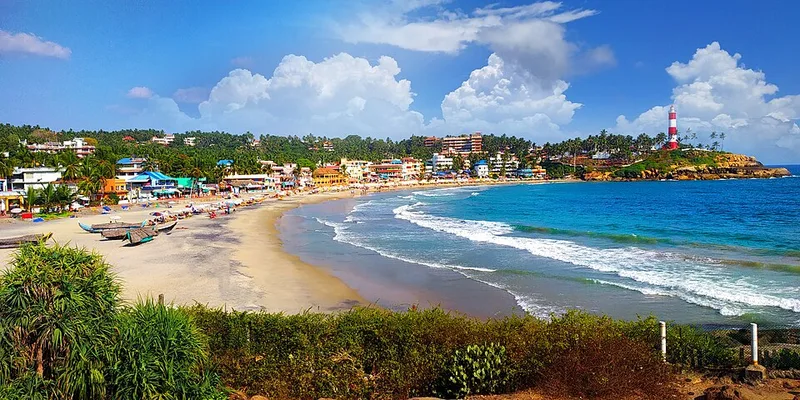
- Swim only where lifeguards are on duty and flags mark the patrolled zone. At Kovalam, red-and-yellow flags mark where lifeguards are stationed.
- Treat calm-looking water with caution. Lifeguards report that most rescues happen 300 to 500 m from shore, where undercurrents strengthen.
- Water sports such as parasailing and jet-ski rides run at the busier beaches like Kovalam in season, through licensed operators. Confirm the operator and conditions on the day.
- If there is no guard and no flag, do not go out for a swim.
How Crowded is Kerala in January?
January is peak season, the busiest and priciest stretch of the year. The first week, carrying New Year demand, is the tightest of all for houseboats, hill hotels and flights. Things ease a little from mid-January once the holiday rush passes, though the month stays busy throughout.
There is a second crowd that catches planners out: the Sabarimala pilgrimage. Through mid-January, pilgrim numbers swell across Pathanamthitta and the approach roads via Kottayam and Kollam, which congests traffic and fills accommodation in that belt. It has little effect on the beaches or on Munnar, but it is a real factor if your route runs through central Kerala's hill roads.
How Much Does a Kerala Trip Cost in January?
Expect peak-season prices across the board, with prices highest in the New Year week. As a rough guide, a mid-range January trip runs approximately Rs 4,000 to Rs 9,000 per person per day, twin sharing and land only, covering a mid-range hotel, a car with driver, entry fees and meals, and excluding flights.
For two people over a week that works out to roughly Rs 55,000 to Rs 1,25,000 before flights, depending on hotel class, how much of the hill-station and New Year premium you hit, and whether you add a houseboat night. Treat these as indicative, as of October 2026.
The biggest single swing is the houseboat. In Alleppey and Kumarakom, a one-bedroom boat runs roughly Rs 7,000 to Rs 12,000 per night for a deluxe, Rs 12,000 to Rs 20,000 for a premium, and from Rs 20,000 up to about Rs 50,000 for a luxury, per boat per night, meals usually included.
What moves the price in January, specifically: the New Year surcharge in the first week, peak demand on hill hotels in Munnar and Thekkady, and booking late into a month where availability is already thin. If you are shaping a budget, our Kerala tour packages and the Alleppey backwater houseboat package give you a current, costed per-person starting point.
Best Kerala Activities to do in January
The dry, cool weather opens up almost everything, and a few things are at their best this month specifically.
- Tea-estate walks in Munnar: Walk the estates in the early cold, when the light is sharp and the hills are clear.
- Eravikulam National Park: Visit near Munnar while it is open. It closes around 1 February for the Nilgiri tahr calving season, so January is one of your last clear months.
- Periyar Lake boat cruise: Take the cruise at Thekkady, or a guided nature walk, in dry-season conditions. The current KTDC boat fare, around Rs 450 per, inclusive of 18% GST.
- Backwater houseboat stay: Spend a night on an Alleppey or Kumarakom houseboat while the backwaters are calm and dry.
- Theyyam performances: See a Theyyam ritual in Kannur or Kasaragod if you are in the north.
- Beach day at Varkala or Marari: Take a slow beach day, with the sea calmer than in the monsoon months.
What are the Best 5 Places to Visit in Kerala in January?
Chosen for what January does well: cold hill nights, calm backwaters, dry-season wildlife and strong beach weather.
- Munnar: Munnar is at its coldest and clearest in January. Nights fall into single digits with frost on the tea slopes, and days stay bright near 20°C, ideal for estate walks and the Mattupetty and Top Station viewpoints. Eravikulam National Park is still open this month before its February closure, so plan that visit early.
- Alleppey and Kumarakom backwaters: The backwaters are at their best in January: calm, dry and warm, which is exactly why houseboats sell out. An overnight cruise through the Alleppey and Kumarakom canals gives you still mornings, open paddy views and comfortable nights. Book weeks ahead, since this is peak season and prices are highest in the first week.
- Thekkady (Periyar): Thekkady suits January for its dry-season wildlife and cool, comfortable evenings. The Periyar Lake cruise is at its most pleasant now, and guided nature walks and spice-garden visits fill the days. Keep in mind that the nearby Sabarimala pilgrimage peaks mid-month, so the approach roads through this belt can get busy.
- Fort Kochi: Fort Kochi rewards January with warm, rainless days for wandering its heritage streets, the Chinese fishing nets at sunset, and the cafes and galleries of the old quarter, all without the sticky monsoon humidity. In some winters the Kochi-Muziris Biennale fills the area with contemporary art, so check whether an edition is running.
- Varkala: Varkala gives you January sun on a dramatic clifftop, with a calmer sea than the monsoon leaves behind and a string of cafes along the edge. It is more relaxed than Kovalam and good for slow beach days. Swim only where lifeguards are posted, as currents remain a year-round risk here.
For a route that strings the first four together, our best of Kerala circuit through Kochi, Munnar, Thekkady and Alleppey is built for exactly this month, and the Munnar tour packages cover the hills on their own.
Travel Tips for a Kerala Tour in January
- Book early. Houseboats, hill hotels and flights are tightest in the first week, so lock peak dates weeks ahead.
- Carry a genuine warm layer for Munnar. Visitors routinely underestimate how cold the nights get.
- See Eravikulam early in the month if the park matters to you, since it closes around 1 February.
- If you route through Pathanamthitta or eastern Idukki in mid-January, plan around Sabarimala pilgrim traffic and build in buffer time.
- Check the NH-85 road status to Munnar before you travel. That highway has had recurring construction and monsoon-season disruption.
- Start sightseeing early. The coastal sun is strong by mid-morning.
- Swim only at lifeguarded beaches, and follow the flags.
Thinking about a different month? Compare with Kerala in December for the same dry weather with even higher demand, or Kerala in February, still dry and slightly warmer, when Eravikulam has closed. For the wider picture, see our best time to visit Kerala guide.
FAQs
Yes, it is one of the best. January is dry across most of the state, warm on the coast at around 31°C and cool to cold in the hills. Seas are calmer than the monsoon months and the backwaters are at their most settled. The trade-offs are peak-season prices and crowds, so it suits travellers who will book early and do not mind company.
Only in the hills, and there it genuinely is. The temperature in Munnar falls to single digits on clear January nights, sometimes with frost, while days stay mild near 23°C. Other hill stations like Vagamon and Thekkady are cool after dark but less extreme. The coast and backwaters stay warm throughout, around 23°C at night and 31°C by day, so you only need warm clothing for the high ranges.
Rarely. The coast averages roughly 20 to 25 mm of rain across one or two days in January, and the far north near Kozhikode is drier still. The northeast monsoon has withdrawn by now, so this is firmly the dry season rather than the tail of any rains. The odd misty morning in the hills aside, rain almost never interferes with a January itinerary.
Yes on both counts. January is the busiest and most expensive month, with prices highest and availability tightest in the New Year week. Houseboats, hill hotels and flights all carry peak rates, and availability thins quickly. Booking well ahead is the single best way to manage both cost and choice, especially for the first ten days of the month.
The sea is calmer in January than in the monsoon months, which makes it one of the more swimmable times of year, but no Kerala beach should be treated as automatically safe. Undercurrents and rip currents are a year-round risk. Swim only where lifeguards are on duty and flags mark the patrolled zone, and stay out of the water when there is no guard present.
Yes. Eravikulam, near Munnar, is open through January and typically closes from around 1 February for roughly two months during the Nilgiri tahr calving season, reopening around April. That makes January one of the last clear windows to visit before the closure. Confirm the exact dates with the Kerala Forest and Wildlife Department before a late-January visit, as the window shifts slightly each year.
Pack for two climates. Light cottons and strong sun protection for the warm, humid coast and backwaters, and a proper warm layer, a fleece or light jacket, for cold Munnar mornings and nights. Add closed shoes for hill walks, modest clothing for temple visits, and insect repellent for backwater and wildlife areas. A light rain shell is optional, as you will rarely need it.
The Sabarimala pilgrimage peaks in mid-January around Makaravilakku, drawing very large crowds to Pathanamthitta and the approach roads through Kottayam and Kollam. It congests traffic and fills accommodation across that central belt. It has little effect on the beaches or Munnar, but if your route runs through those hill roads, plan around it and allow extra travel time.
If you want the cold Munnar mornings, a calm-water houseboat night and the dry-season wildlife without the first-week scramble, tell us your dates and we will build the route around them. Start with our Kerala tour packages.